The Old Limitations No Longer Apply — Part 3: What Happens When We Can Make Our Own?
October 12, 2026
A Singularity Log Special · Part 3 of 4
In this series
- The Price of Admission
- The Rentier's Last Stand
- What Happens When We Can Make Our Own? — this essay
- What's Left to Build?
Previously
- Part 1: AI lowers the price of turning an intention into working software, letting the idea come before the apprenticeship.
- Part 2: Cheaper alternatives weaken subscription moats; a tool built for one person can succeed without winning a market.
Hero illustration for this installment; the scene is interpretive artwork.
Four Hours and a Raspberry Pi
I'm a blind woman with some coding chops, an unemployed person's budget, and an appetite for making things that don't need to exist. And I can put together a credible, open-source alternative to an Apple TV in about four hours.
RetroMachine hasn't reproduced the Apple ecosystem, its commercial integrations, or years of refinement and testing. It's a hobby project with rough edges. The television-control integration that inspired this essay wasn't working when I tried it.
A few years ago, I'd have needed to investigate existing software, learn the hardware interfaces, write integrations, and fight compatibility problems before I could assemble the pieces. Even with my professional background, I wouldn't have bothered.
Today, I can describe what I want, collaborate with an AI system to implement it, test the results, find problems, and revise. The accumulated work of countless software engineers reaches me through tools that translate my intentions into running code.
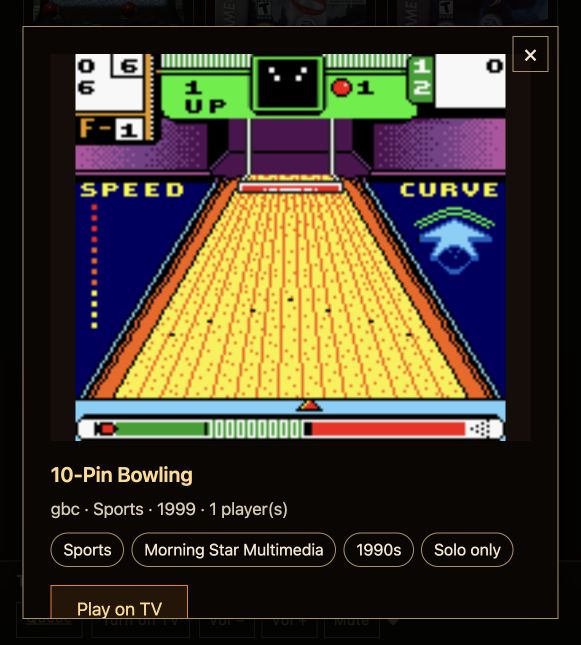
A game-detail screen brings artwork, metadata, related-game tags, and a launch control together. "Play on TV" launches the game on the TV.
I enjoy engineering. I like understanding how things work, choosing an architecture, and finding elegant solutions to ugly problems. Now I can spend more of my effort on those decisions instead of grinding through every intermediate step. That has changed the economics of my hobbies.
I can build an arcade sports game featuring my friends' furry characters. I can design custom board game pieces and manufacture them on a 3D printer. I can make software to accommodate some peculiar aspect of how my brain works. I've been doing all of these things, getting from an idea to something functional before the novelty wears off.
These projects don't need investors, business plans, or an addressable market. I make them because I want them and can afford the work. The cost doesn't have to fall to zero. It has to fall below the point where I give up.
What Happens When We Can Make Our Own?
A software company decides what to build, how it works, which features survive, and what access costs. The consumer can choose among products, complain, or leave, but has little power over the product itself.
That's capitalism.
Serving millions of people requires compromise. No company can accommodate every preference. But depending on a product you can't change means living with someone else's priorities.
As a visually impaired person, I know this arrangement. Accessibility gets treated as an optional improvement until the owner makes time for it or a large enough account requests it. When a product doesn't work for me, I can request changes (which never works), hunt for alternatives, or devise workarounds. Sometimes I have to live with the problem.
RetroMachine gives me another option. If I can't see something, I can change the interface. If navigation doesn't make sense, I can redesign it. If I want an obscure feature that would die in a product manager's prioritization meeting, I can build it.
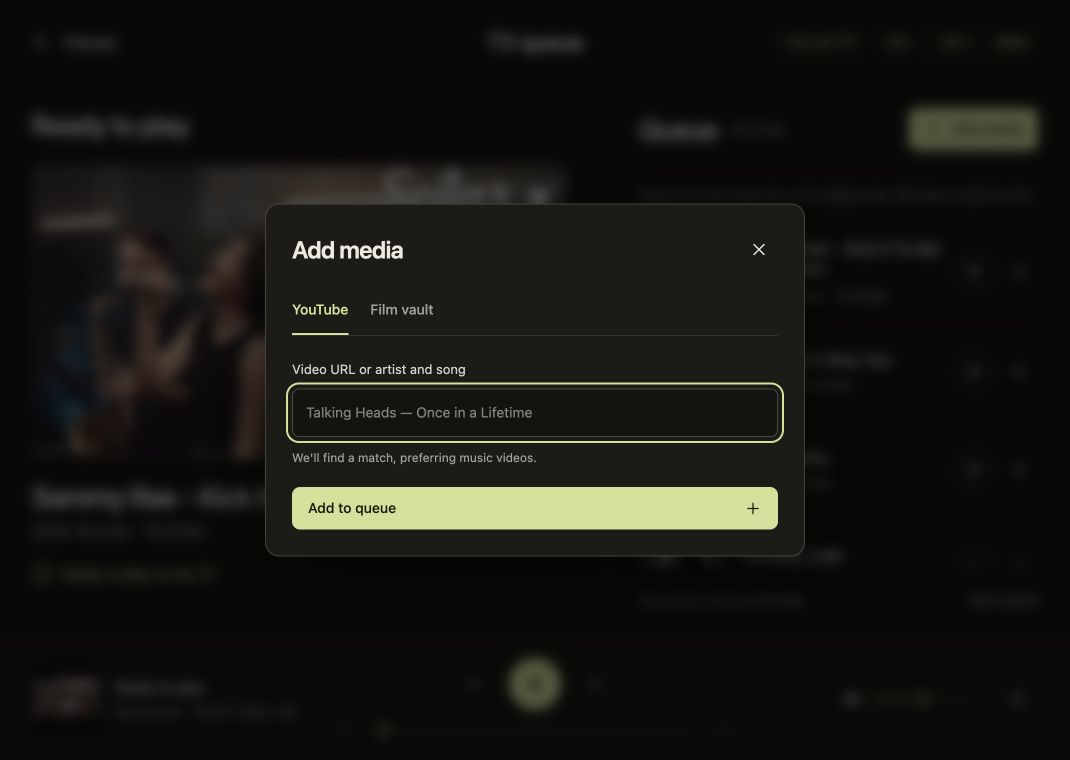
The media picker accepts a video link or an artist and song name, using an ordinary request rather than a file-management workflow.
Most people don't want to maintain an entertainment system any more than they want to repair a refrigerator. Reliability, security, support, and the pleasure of having something work still give commercial products value. But a practical alternative changes the bargain: I can ask what the company offers me besides the difficulty of leaving.
And I can share what I build. One person solves a problem. Another improves the tool. A third adapts it for a different purpose. A hobby becomes an alternative for people who never needed to understand how it was made. Open source has worked this way for decades. AI widens the circle of people who can participate and the scale of what a small group can attempt.
Every customer doesn't have to become a programmer for that to threaten rent on convenience. A few people can build an alternative the rest of us can use.
The Abundance We Don't Recognize
We tend to judge new technologies against the things they replace. Is AI-generated code as good as a professional engineer's? Can an AI-generated image compete with an illustrator's work? Does an assistant save enough time to justify its cost?
Those questions assume the work would have happened anyway. They compare two ways of making the same thing and overlook everything that would never have been made.
Nobody was going to hire a development team to build RetroMachine for me. Nobody was going to finance my arcade sports game or commission the peculiar tools I make for myself. The market was too small. The cost was too high.
These weren't opportunities waiting for investment. They were nonstarters. But now they exist.
The boundary between projects we can justify and projects we abandon is moving. Ideas are crossing it. Some will become businesses; others will remain hobbies, community projects, or personal conveniences. Some will be terrible. Many will solve a problem nobody outside the person who made them cares about. That's the point.
We make art, invent games, decorate our homes, and pursue strange enthusiasms because they make life interesting. Organizing technological production around financial return taught us to ask whether those desires could support a product. Cheaper creation lets us act on them without selling anything.
That is abundance: more room to make something for the pleasure of making it, or because it makes your life easier. It doesn't have to resemble a gleaming automated utopia to count.
That freedom is real, even though it doesn't pay the bills. The harder question is what we do with it once we stop treating every useful thing as a potential product and start asking what we want to exist.